
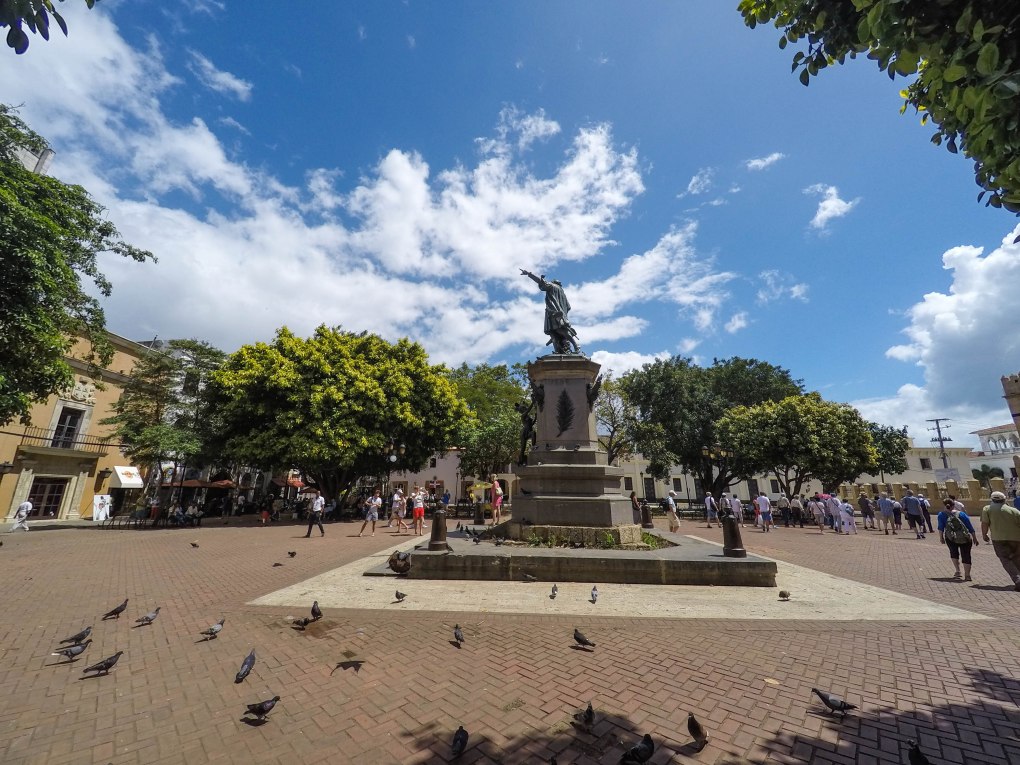
Still a part of the Caribbean, but with so much more vibrant history (more like where the history of the Americas began), the Dominican Republic is a country full of life, culture, African/Spanish influenced cuisine and beautiful beaches. Yes, I said it again! Beautiful beaches. Side note: [We had not realized how much sun we would be exposed to when planning this journey. Obviously, since we started in the Caribbean it has been inevitable. Leave it to us to be surprised. For the record, we normally travel to big cities and not beaches. It wasn’t till they started asking Enoc if he was Dominican that we put two and two together.]  Like most foreigners who visit the Dominican Republic, we thought it would be fun to stay in the most touristic (and most commercial) part of the island, Punta Cana. With tourism being the number one industry in this country, locals are excited to see visitors and they go out of their way to ensure you are having a great time. One thing that surprised us was how happy and engaged Dominicans became when they heard us speak Spanish. They immediately wanted to know more about us and this gave us an opportunity to ask them questions about the country and the people. In fact, speaking and understanding Spanish has not only been helpful, but a necessity on our journey thus far. Most visitors can get away with English at nearly every tourist site, but when you are venturing off to explore local life, it helps if you speak the local language. Dominican Spanish is generally spoken very fast and even though we asked locals to repeat at times, it was a good feeling to communicate accordingly. They appreciate it too!
  Punta Cana is stunning! Upon arrival, we were fortunate to stay at an all-inclusive resort for a few days thanks to Groupon (Enoc is always impressed with the deals I find). Although a stay at any of the resorts will be nothing short of fantastic, you can’t expect to see what the country and people are all about when you are sunbathing and drinking piña coladas all day. Now, there is certainly nothing wrong with crystal clear waters, unlimited fresh fruit smoothies, an open bar and delectable meals, if you’re into that sort of thing (pun intended). However, to truly experience the vibrant history surrounding you, we highly recommend visiting other parts of the country and perhaps doing it in local style by taking a motoconcho.
- A Domino Effect: 30% unemployment in the DR
- Haiti currently faces 70% unemployment causing Haitians to migrate to the Dominican Republic; Dominicans migrate to Puerto Rico for employment opportunities, Puerto Ricans are migrating to the States seeking employment.
- Minimum wage is about 140 USD per month (public service: police officer)
- Up to $900/month for teachers
- Up to $600/month for nurses
- Up to $300/month for firemen (most are volunteers)
- Politicians? I’ll let you research that one.
- Tourism? Work more and make less. Same minimum wage salary if not lower because there is different forms of income (i.e., Gratuity).
- Not enough classrooms to accommodate all students
- 3 shifts to attend school (morning, afternoon and night)
- Dropping out is common for many reasons
- If a student drops out, no one cares. They will not ask questions, or go looking.
- Uniforms are mandatory
- 75% public, 25% private
- Current president is building 1000 more schools and his goal is to have full morning shifts in effect before his term ends. (AWESOME)!
- Dominican pride is baseball not religion
- We had an opportunity to visit one of the baseball camps, or Dreams Factory as most commonly referred to by Dominicans, during practice hours. The grounds are completely private and run by the major league teams in an effort to one day unite more professional Dominican players in the States. Here, success in baseball means a promising future.
- World famous Rum
- Since the DR is considered an agricultural paradise for the production of sugar cane, the Rum is arguably the best in the world.
- Brugal, Barcelo and Bermudez – known for their “smoothness”
- White Rum, Dark Rum, and Special Rum (aged for 50 years).
- And of course, we can’t forget Mamajuana: the indigenous drink of the Dominican Republic. It is a brew of twigs and bark and herbs, with rum and red wine and honey. Whether you love it or hate it, it’s sold everywhere!
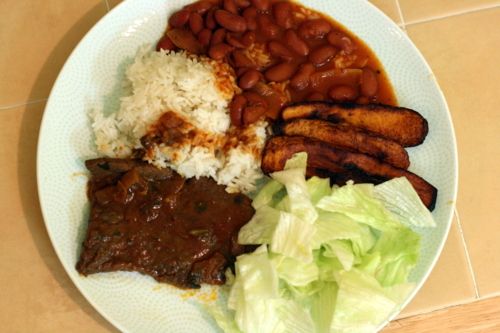
La Bandera (Dominican Flag)- National Dish in the Dominican Republic.
Rice, Beans, Salad, Beef, and Fried Plantains
Among other delicious food, this dish is most likely to be served everyday in Dominican households.
How could anyone ever get tired of this? It is absolutely delicious.


3 thoughts on “Columbus, Motoconchos and Mamajuana”